
How Do Scientists Separate U-235 from U-238? Inside Uranium Enrichment
Some of the most powerful technologies ever created by humanity depend on an almost invisible difference. Not a difference in color. Not a difference in chemistry. Not even a difference large enough for the human eye to detect — but a tiny difference in atomic mass.
From that microscopic imbalance emerged nuclear energy, nuclear submarines, medical isotopes, and some of the most dangerous weapons ever built.
The process is called uranium enrichment. And at its heart lies one of the strangest engineering achievements of the modern world: separating two atoms that are almost identical.
The Two Faces of Uranium
Natural uranium is found deep inside the Earth, but it is not made of only one type of atom. Instead, it exists mainly as two isotopes: Uranium-238 (U-238), which makes up about 99.3% of natural uranium, and Uranium-235 (U-235), which accounts for only about 0.7%.
Chemically, they behave almost the same. To ordinary matter, they are nearly indistinguishable. But physically, there is a crucial difference: U-235 can sustain a nuclear chain reaction. And that changes everything.
What Makes U-235 Special?
When a neutron strikes the nucleus of a U-235 atom, the nucleus can split apart — a process called nuclear fission. The splitting releases enormous energy, additional neutrons, and heat. Those newly released neutrons can then strike other uranium atoms, creating a self-sustaining chain reaction:
A repeating cascade hidden inside matter itself. This is the mechanism behind both nuclear reactors and nuclear weapons.
The Problem: There Is Almost No U-235
Natural uranium contains only 0.7% of the useful U-235. That means scientists must somehow isolate an extremely rare isotope from another isotope that behaves almost exactly the same way. This is what uranium enrichment truly is: the separation of the rare fissile isotope U-235 from the overwhelmingly abundant U-238. And achieving that separation is extraordinarily difficult.
The Centrifuge Machines
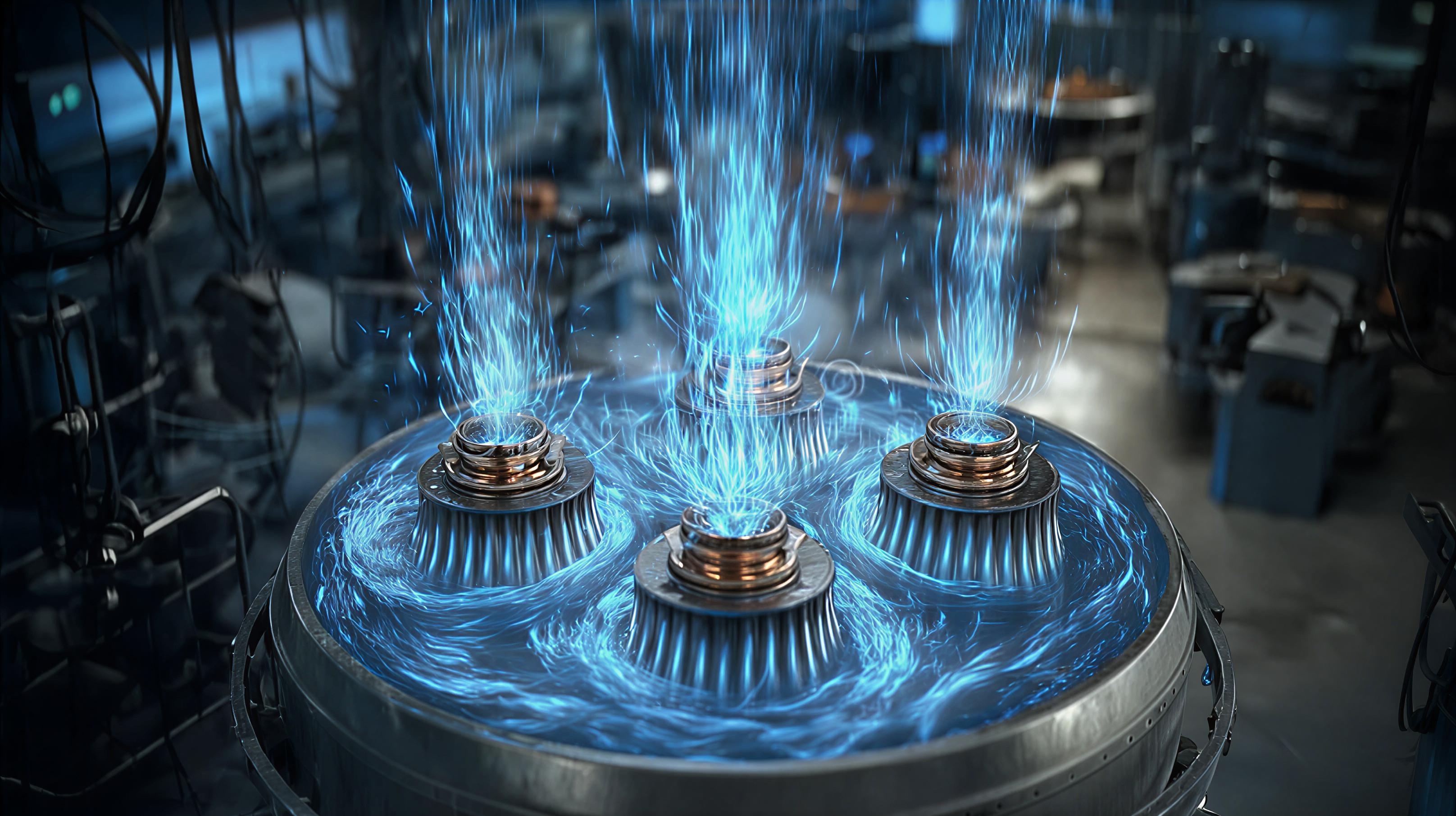
Modern enrichment facilities rely mainly on gas centrifuges. The uranium is first transformed into a gas called uranium hexafluoride (UF₆), then injected into rapidly spinning cylinders. Some centrifuges rotate tens of thousands of times per minute.
Inside those cylinders, physics quietly performs the separation.
Because U-238 is slightly heavier than U-235, the heavier isotope drifts outward under centrifugal force, while the lighter isotope remains slightly closer to the center. The difference is microscopic — one centrifuge alone accomplishes almost nothing. But thousands of centrifuges connected in series gradually increase the concentration of U-235, through tiny separation after tiny separation, until the composition of the uranium itself has shifted.
Levels of Enrichment
Not all enriched uranium is the same. Different concentrations serve different purposes.
Low enrichment (3%–5%) is used mainly in civilian nuclear power plants — sufficient for producing electricity while remaining far below weapons-grade material.
Medium enrichment (up to 20%) is used in research reactors, scientific facilities, and medical isotope production.
High enrichment at very high concentrations can make uranium suitable for military applications. This is why uranium enrichment remains one of the most carefully monitored technologies on Earth.
Why Uranium Enrichment Became Geopolitical
Uranium enrichment is not merely a scientific process — it is also a geopolitical one. Because the same technology used for civilian nuclear energy can potentially be extended toward weapons production, enrichment facilities are often surrounded by international inspections, diplomatic negotiations, sanctions, and global tension.
The machines themselves are neutral. The physics is neutral. But the consequences depend entirely on how humanity chooses to use the energy hidden inside matter.
The Strange Beauty of Isotopes
Perhaps the most astonishing aspect of uranium enrichment is how small the original difference truly is. Two atoms — almost identical, nearly the same chemistry, nearly the same behavior. And yet one of them helped reshape the modern world.
The nuclear age emerged from a tiny imbalance inside the nucleus of an atom. A reminder that in science, the smallest differences sometimes create the largest consequences.
EisatoponAI
An independent intellectual publication exploring mathematics, AI, science, paradoxes, and the hidden structures behind reality.